


Have you ever felt like your brain is “buffering”?
You are sitting at your desk. You have been studying for four hours. You look at a math problem, but your mind feels like it is filled with thick, grey smoke.
Teachers call this brain fog after studying. Students call it a nightmare.
If you are preparing for the 2026 CBSE Boards, JEE, or NEET, you cannot afford to have a cloudy mind. In this guide, we will use science and simple steps to help you stay sharp.
What is the “Cognitive Haze”?
Brain fog isn’t a medical disease. It is a signal from your body. It means your “mental battery” is at 1%.
When you have mental fatigue after long study hours, you might feel:
Cloudy: Like your brain is stuck in a fog.
Distracted: Small noises start to feel very loud.
Forgetful: You read a sentence and forget it two seconds later.
Slow: Simple tasks take twice as long to finish.
The Student Impact Table
| Symptom Category | How it feels | Impact on Your Grades |
| Concentration | Easily distracted by phone or noise. | You finish less work in more time. |
| Memory | Forgetting facts learned 10 minutes ago. | Poor performance in exams. |
| Mental Energy | Feeling “wiped out” even after a nap. | You lose the motivation to study. |
| Processing Speed | Taking a long time to understand instructions. | Falling behind in fast classes. |
The Khaitan Public School Way: A Better Way to Learn
At Khaitan Public School (KPS), we believe you are more than just a test score. Our philosophy is “Child-Centered.” This means we care about your brain and your feelings.
We use Individualized Educational Plans (IEPs). This is a fancy way of saying we know everyone learns at a different speed. We provide counselors to help with stress because we know that a happy brain is a smart brain. We don’t want you to burn out. We want you to shine.
Why Your Brain “Shuts Down” (The Science)
To know how to clear brain fog while studying, you must understand the “Engine” inside your head.
1. The Stress Hormone (Cortisol)
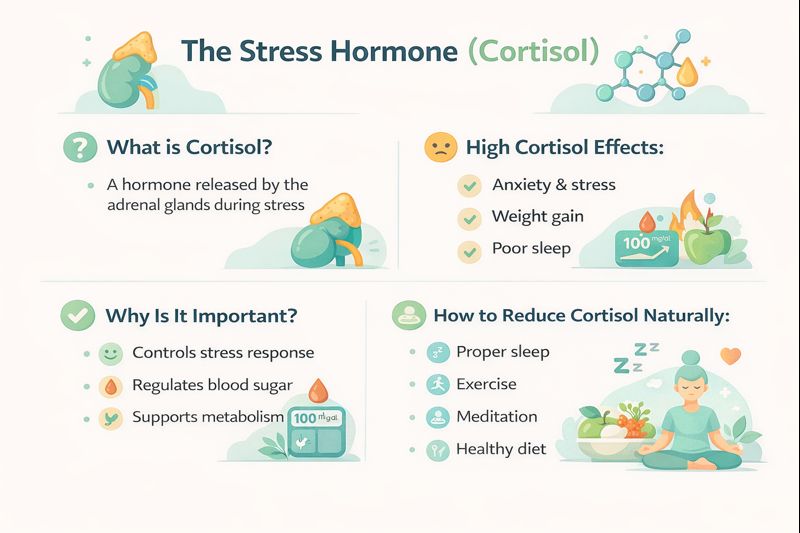
When you stress about JEE or NEET, your body releases cortisol. A little bit helps you stay alert. But too much cortisol for too long actually hurts the hippocampus. That is the part of your brain that handles memory. Stress literally “blocks” your ability to learn.
2. Neurotransmitter Drain
Your brain uses chemicals called dopamine and serotonin to stay focused and happy. After several hours of hard work, you run out of these chemicals. When dopamine is low, you lose your “drive.” You stop caring about the work.
3. The Oxygen Problem
When you sit still for three hours, your blood moves slowly. Your brain is 75% water and needs constant oxygen. If you don’t move, your brain “starves,” leading to a loss of concentration after studying.
The 2026 Attention Crisis
Did you know that in 2026, the average human attention span is only 8.25 seconds? That is shorter than a goldfish!
Attention Span by Group (2024-2026 Data)
| Demographic Group | Average Attention Span | Decline Since 2000 |
| Gen Z | ~8 Seconds | 33% Decrease |
| Millennials | ~12 Seconds | Significant |
| Baby Boomers | ~20 Seconds | Moderate |
The “Refocusing” Penalty
Every time you check your phone, you pay a “tax.” Research shows it takes 25 minutes to get back into “Deep Focus” after one notification. If you check your phone every 10 minutes, your brain never actually starts working at 100%.
How to Avoid Brain Fog: 5 Simple Strategies
1. Use “Flowtime” instead of “Pomodoro”
The Pomodoro Technique (25 mins work / 5 mins break) is famous. But for hard subjects like Math or Physics, 25 minutes is too short.
Try Flowtime:
Study as long as you feel “in the zone” (usually 50 to 90 minutes).
Take a break only when you feel your focus start to dip.
This respects your brain’s natural rhythm.
2. Eat “Brain Fuel”
Your brain needs stable energy, not sugar crashes.
- Blueberries: These are high in anthocyanins. This is a special “paint” for your brain cells that helps them talk to each other faster.
- Walnuts: These help with “inferential reasoning.” That is the ability to solve complex puzzles—perfect for JEE!
- Oatmeal/Eggs: A low-sugar breakfast gives you energy for the whole morning.
Brain Food Quick-Ref Table
| Food | Benefit | Best For…
| Blueberries | Faster processing speed. | Word recall and memory. |
| Walnuts | Better logic and reasoning. | Math and Science. |
| Leafy Greens | Prevents “brain slowness.” | Long-term brain health. |
| Whole Grains | Steady energy. | Staying awake in class. |
3. Fix Your Environment
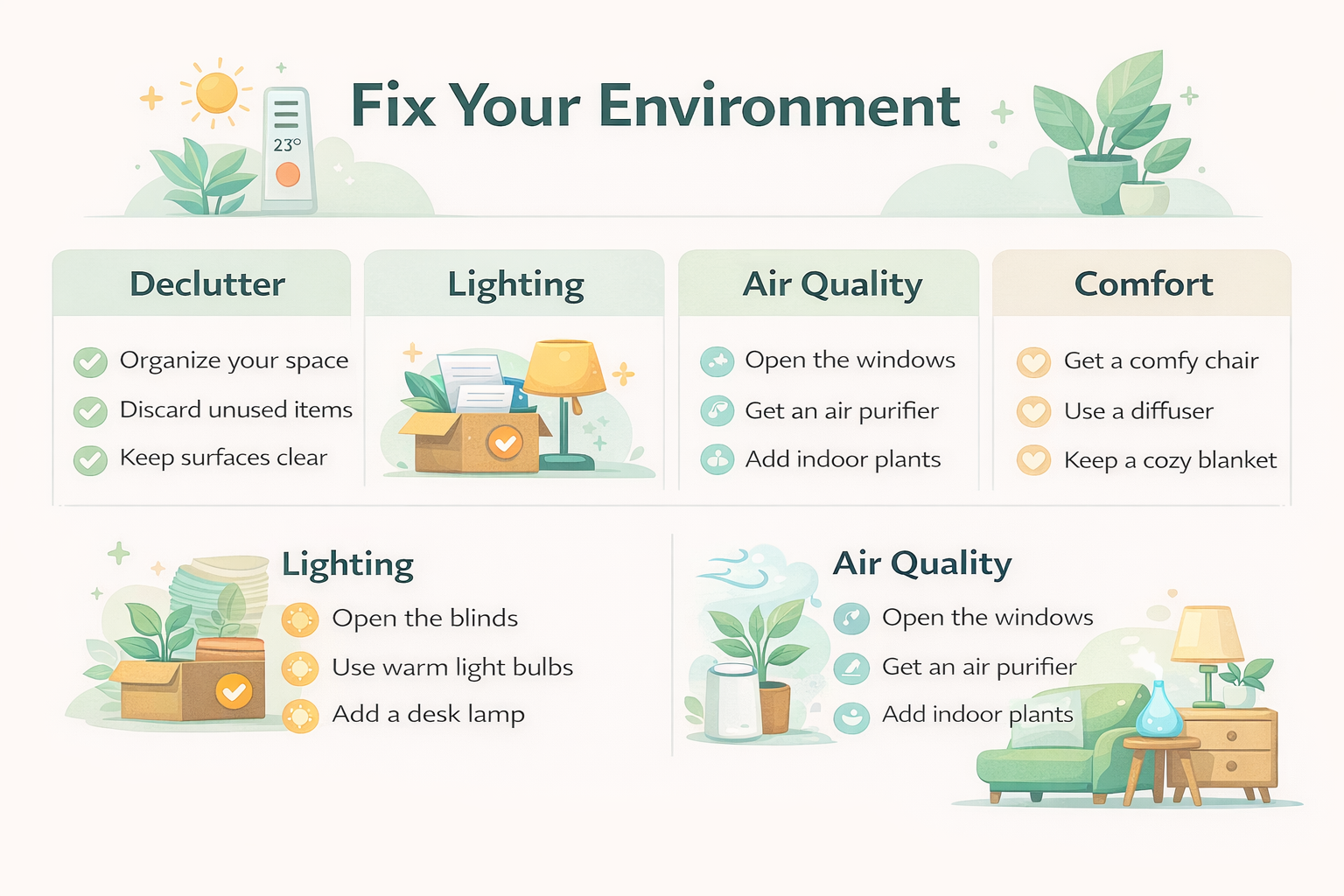
Your room might be making you tired.
Open a window: High levels of $CO_2$ (Carbon Dioxide) in a closed room make you sleepy. Fresh air = Fresh thoughts.
Look at a plant: “Attention Restoration Theory” says that looking at nature (even a small desk plant) helps your brain recover from fatigue.
Cool it down: The best temperature for your brain is between 20°C and 23°C.
4. Use the “5-4-3-2-1” Reset
If the fog hits you right now, do this:
5 things you can see (The texture of your pen).
4 things you can touch (The edge of your desk).
3 things you can hear (A bird, a fan, a car).
2 things you can smell (Coffee or a candle).
1 thing you can taste (A sip of water).
This “reboots” your brain and brings you back to the present moment.
5. Hydrate or Hibernate
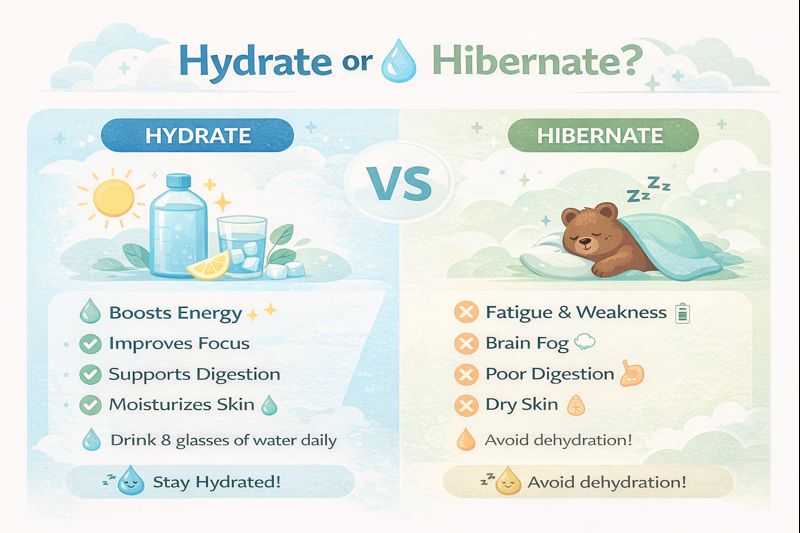
Even a 2% drop in water in your body causes brain fog. Drink water before you feel thirsty.
The 2026 Exam Calendar: Why You Must Act Now
The schedule for 2026 is very tight. If you burn out in January, you might not recover for the big exams in April.
| Examination | 2026 Dates | Pressure Level |
| CBSE Class 10 | Feb 17 – March 11 | High (First big board) |
| JEE Main (Session 1) | Jan 21 – Jan 29 | Extreme (Engineering) |
| CBSE Class 12 | Feb 17 – April 10 | Extreme (University entry) |
| NEET UG | May 3 (Expected) | Very High (Medical) |
The Cost of Inaction: In India, 3 out of 5 students struggle with anxiety. If you don’t manage your brain fog, your GPA could drop by 25%. Don’t let your hard work go to waste because of a tired brain.
Advantages and Disadvantages of Different Breaks
The “Scroll” Break (Bad)
What it is: Checking TikTok, Instagram, or YouTube during your break.
Advantage: It feels fun for a second.
Disadvantage: It is “high-cost” for your brain. It causes “context switching,” which makes the fog thicker.
The “Nature” Break (Good)
What it is: Walking outside, stretching, or looking at trees.
Advantage: Your brain “replays” what you just learned. This is called Memory Consolidation.
Disadvantage: You might feel “bored” for the first two minutes.
Frequently Asked Questions (The Skeptics)
“I don’t have time for a 15-minute break!”
If you have brain fog, you are already losing time. You are reading at 20% speed. A break brings you back to 100%. You actually save time by resting.
“Will energy drinks help?”
No. They give you a “spike” and then a “crash.” The crash is when the brain fog becomes permanent for the rest of the day.
“Is it okay to study at night?”
Only if you still get 8 hours of sleep. Sleep is when your brain “saves” the files you studied. No sleep = No memory.
What Happens if You Don’t Take Action?
If you keep pushing through the fog, you will hit Study Burnout.
Burnout makes you feel like you hate your favorite subjects. It leads to lower grades and can even make you want to quit school (the “NEET” trend).
But imagine the opposite.
Imagine sitting for your 2026 Board Exam. Your mind is clear. You see a question and the answer pops up instantly. You feel confident. You feel powerful.
That feeling is possible. It starts with a glass of water, a 10-minute walk, and a handful of walnuts.
Summary Checklist for a Clear Brain
Water: One glass every hour.
Air: Open your window for 5 minutes every hour.
Food: Eat blueberries or walnuts for snacks.
Timer: Use the “Flowtime” method.
Phones: Put your phone in a drawer while studying.
Reset: Use “Box Breathing” (4 seconds in, 4 seconds hold, 4 seconds out) if you feel stressed.